Poetry

Poetry Religion

The White Box

Foreword

During 1974-1990, I was pastor of Luther Rice Memorial Baptist Church in Silver Spring, Maryland. The following is based on one of my experiences. After all these years, the memory is still vivid.

Couldn’t help noticing you aren’t beside your
wife here. I do remember your elaborate
wedding just back in the summer. And now
this.

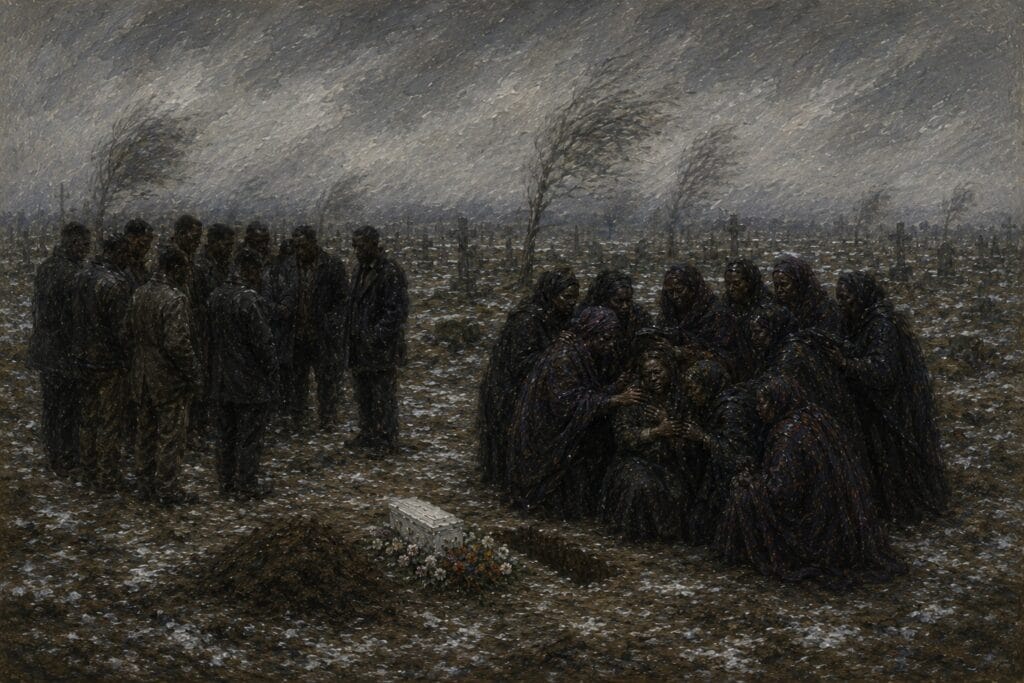
All tight around his wife a huddle of women
is doing all they know to do. They cry, they
moan, they wail, they pat and hug. But she
stays grim and silent.

You pay no attention. Your anger is unending.

I stand up front in my assigned space, telling
how the Lord is merciful and good we surely
hope. Funny tent up over our heads, those
who could get in under. Most are scattered
out around and slanting against the cold
wind, catching whatever words fly by.

Words. Words know less in times like this. 
Where small wooden boxes lie quiet on
the ground. 

The box is white like the dress she wore
in summer, walking the aisle with
flowers in her hands and a baby
already in her womb. 

Baby dead now, some days ago in a crib
at the babysitters. Mother gone out and
doing something somewhere they said. 

No charges placed, except by the
looks you give. 

Keeping my eyes there in the Holy Book
is safer. Eyes tell. Yours are full of
fire and accusation. Hers sink deep in the
ground like the spades of grave diggers. 
Ground where this baby will lie from
here on out. 

And after my say is over, you move to
make sure about the matter. 

Put the casket down in there and
cover it up,
you command. No, not later,
I mean right now.
 

We’ll wait.

Man in charge hesitates. He never had this
before. They always do that after people
leave. Thinks this is crazy but keeps his
mouth shut. Goes and gets two in overalls
to bring their shovels and do it. Down
the little box goes.

Today they work before an audience.
Like I do. They keep glancing around
nervous but
carry on as directed.

Cold time passes – slow as ice melting. 
Chills enter people’s clothing with no
letup. Faces turn, seeking the best
direction, and find none. Sounds of
dirt’s arrival mingle with the wind. Dirt
shoveled in and pounded tight. 

Tight like the twisted crib sheet around
the baby’s small neck. 

Mother begins to scream now. She is out
of her silence now. Other women join in
while they hold her against falling. 

The men stand together in their separate
groups, faces like wartime, forbidden to
cry or help either one. 

I must not move to go until others do.
Unfitting that would be.

With nothing more to say or do, my eyes
study the nearby paths. They climb to
the tops of tombstones, then back down
again. They guess the history of the buried
by the reading of their names. Time
stretches, measured out in shovelfuls.

And then finally a last and final one.

A woman whispers how cold the wind is
and how a person might catch their death
out here. Heads nod. The cries of the
women seem less and the talking more. 

The men are getting more courageous. 
They stir and nod and look in the direction
of the cars. Away from the business
we did out here today. 

And then like animals in a herd, we
move toward our cars. Cars that have
waited cold and quiet through it all. 

They lead her to hers, as you
march to yours. 

It is over now. My part is.

I put down my Bible and start the heater.


Add your name and email address to receive notices of new posts on edbriggs.com

Poetry Religion

The Canticle of Creatures

Foreword

The following is not new and not mine. It was composed by St. Francis of Assisi around 1224-1225.

He was very ill and near the end of his life. He was nearly blind, in severe pain, and according to tradition he wrote the main body of the poem after a night of particular agony. There is also a belief that he wrote the final stanza welcoming “Sister Bodily Death” as he knew he was dying. Regardless of its history, the piece is remarkable for its poetic beauty, its love of the created world, and its spirituality that embraced suffering, mortality, and the physical world rather than fleeing from them. It may well be the most important early Christian text linking faith and ecology. It also presents the world as a community of creatures, and our praise and thanksgiving as the proper response.

I had read and studied this poem in other years, but it was heartening to read it again. This is why I am passing it along.


Thine be the praise, good Lord
omnipotent, most high. Thine
the honor, the glory, and every blessing.
To Thee alone, most high, do these belong;
to speak Thy name no living man is worthy.

Be praised, my Lord, with all that Thou hast made;
above all else the sun, our master and our brother,
whence Thy gift of daylight comes.
He is most fair, and radiant with great splendor,
and from Thee, most high, his meaning comes.

Be praised, my Lord, for our sister moon,
and for the stars;
Thou hast placed in the heavens their clear
and precious beauty.

Be praised, my Lord, for our brother wind
and for the air, in all weathers cloudy and clear,
whence comes sustenance for all which Thou hast made.

Be praised, my Lord, for our sister water,
who is most useful, precious, humble and pure.
Be praised, my Lord, for our brother fire,
for Thine is the power by which he lights the dark;
Thine are his beauty and joy, his vigor and strength.

Be praised, my Lord, for earth, our mother
and our sister;
by Thy power she sustains and governs us,
and puts forth fruit in great variety, with grass
and colorful flowers.

Be praised, my Lord, for those who forgive by the power of Thy love within them,
for those who bear infirmities and trials;
blessed are those who endure in peace,
for Thou at last shalt crown them, O most high.

Be praised, my Lord, for our sister bodily death,
from whom no living man escapes;
woe unto those who die in mortal sin,
but blessed be those whom death shall find
living by thy most sacred wishes,
for through the second death no harm
shall come to them.

Praise my Lord and give thanks unto Him;
bless my Lord and humbly serve Him.


Add your name and email address to receive notices of new posts on edbriggs.com

Nature Poetry Travel

Crossing the Continental Divide at Dawn by Motorcycle

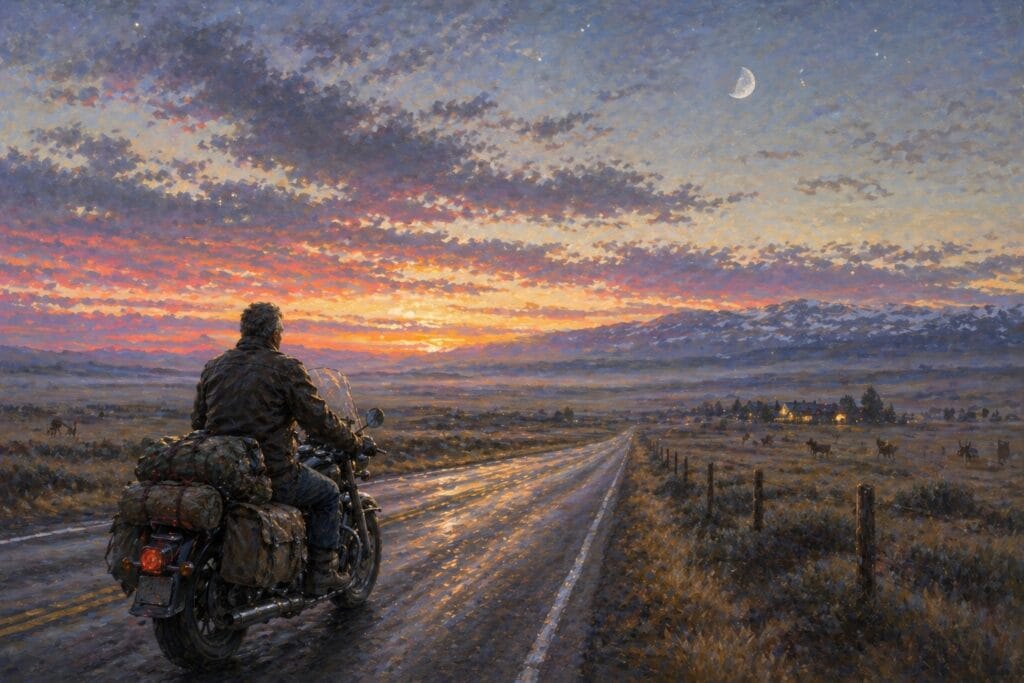
Elk Mountain is solid on my right, and
Colorado snow is melting on the
farther slopes. 

I glide across Medicine Bow River as
stars fade out in turn, the clouds of night
still dark against the morning grey,
one hint of color showing where dawn
will be.

The air I split in two seems not to care,
nor Wyoming law my speed, nor
anyone my passing here. 

It is well with the tires and the motor and
my life. I think how friends will ask
about this trip. Those I can never show
such a morning to. 

I will say the trip took an effort, but was
always a delight, and sometimes an ecstasy. 

Now is the ecstasy. A silver moon
hangs high overhead. The air is clear
like a trumpet note. Already the farm
houses are spilling yellow light from
kitchen windows, where breakfasts
sizzle on the stove. 

The land wakes as on its first day. 
Animals that watch me pass I am
watching too. Deer and antelope
stand grazing
in herds as clouds test
colors of pink and
red and silver. 

Just hours from now I will swoop down
on Cheyanne like Indians used to swoop. 
From among the trucks that got up early too. 

From the side toward Laramie and ocean. 
From whatever is told by men who ride two
wheels across a country in the open air.  


Add your name and email address to receive notices of new posts on edbriggs.com

Poetry Swimming

Eyed On

Being old now and often
eyed on sideways and other
ways for anything suspicious
in my behavior or appearance
I am swimming stroke by
easy stroke down an early
morning lane in the
YMCA pool and all of a
sudden damn here comes water
sneaking inside my goggles
and my eyes blur and I
stop and grab on the wall at
the end not happy and Trish
who is teaching her class down
the way shouts out Ed are you
all right? meaning cramps or
pains or even those sudden
heart things and I say yes I’m
okay it’s just goggles and
then resume lapping and
after that I think on the
lessons here and finish up the
swim and heading out I
pause and share with Trish the
deeper meaning as I see it:

 Swim goggles are like people
they do
act up sometimes.


Add your name and email address to receive notices of new posts on edbriggs.com

Poetry

Dog Prints


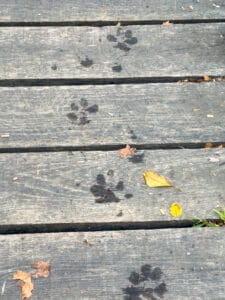
Had I been there and watching when
these marks were made, I would have
known more about what kind of dog
it was. About the size and breed and
color of its coat.

All the scene tells is that a dog was
there and then was gone. It left its
wet footprints and perhaps was
hurried on by smells and sights up
ahead. Even imagined ones, which
can happen with a dog. Or us.

What can wetness on a bridge mean
on a fine sunny day unless a dog
waded or romped in the nearby creek?
In water now flowing to the distance
and never to return.

Wet prints on dry wood hold no
hope of lasting on and arouse the
question: what does?

Do empires, wealth, and worldly fame
go on and on, as those who seek them
hope for?

Or are they much like this: dog
prints on a bridge which will soon
come to nothing? Brief as a dog’s
sip of water from the creek.

How many hikers who cross this
bridge will notice here these marks
so plain beneath them? How
many will think these thoughts?

We pass over and then are gone.


Add your name and email address to receive notices of new posts on edbriggs.com

Poetry Stories

Rabbit Tracks in the Snow


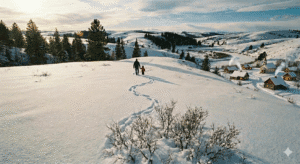
Early in my childhood memory is that house on
the hill in what was called the Pflanze Woods and
the time of the snows that came down in silence
and covered all things and might have meant stay
inside and keep warm but changed when my dad
said let me show you how to track a rabbit.

Mother smiled her approval of this idea as I
wondered about it, then let her bundle me for
the cold and pat and praise me to the outdoors.
I followed him, this North Carolina mountain
man presenting himself as a college professor
of psychology and other of life’s mysteries I had
no need to understand like I did the finding of
where the rabbits go in the snow.

 I had no idea then of how the mountain man
and I would later be at stubborn odds on this
and that, but here I followed him like wisdom
itself and as that which could be no earthly
better that bright and peaceful day. This was
a child’s Christmas and birthdays and ice cream
all bundled together.

I followed him across the yard I played in, and
past the big tree I hoped to climb someday, and
then more out and down along the ridge to where
a rabbit might roam, and was happy because this
journey was for me, me alone, and without my
older brothers who would have ruined it all.

 Dad first explained that many animals such as
dogs and foxes and squirrels leave tracks in the
snow, and we must first find the rabbit kind of
tracks. Not knowing what was right or not right
about this, I still looked and looked as hard as
I could.

And when dad did find some tracks, he showed
how a hopping rabbit lands his large hind feet
down first and in front of his small front feet
which touch down last behind them, and this is
how you know rabbit tracks. I thought this was
a sacred lesson about life in the world ahead of
me. And for that reason, I have never forgotten it.

We followed but never found the rabbit we
tracked that day.

I wondered from those tracks was it running
scarred as if chased by something large and
mean? Or was it just enjoying the new fallen
snow and the clean crisp air?

If it saw us coming, did it fear we had a gun?
Or did it run joyful and carefree as I thought
it might? 

Did it raise its long ears and listen to the
sounds of the east Tennessee town lying down
below our ridge, or were those to a rabbit
the sounds of another world?

They were another world to me that day.

I was tracking rabbits.


Add your name and email address to receive notices of new posts on edbriggs.com

Bicycling Poetry Stories

Mistaken


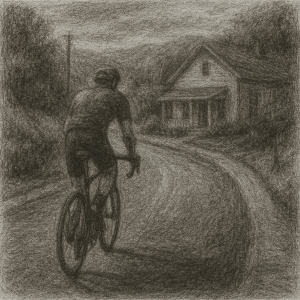
Sometimes a small country church has a nice roadside wall
where a tired bicycle can lean and rest and I can sit beside it
since I am tired too.

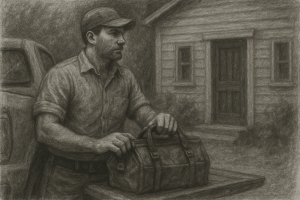
And then his pickup flew by me close and parked in the yard
at the old house across the road. His road. And he glanced
over at me I saw as he grabbed his bagged tools from the
truck bed. And I worried some about that glance of his.

He was what we call a working man. Would not be reading
Dostoyevsky or Reinhold Niebuhr or even David Remnick.
Would not be knowing about things from anywhere but
Fox News, I thought. And might even holler across his road
to say I should not be sitting my woke ass on church property
like I was. And there could be worse things even.

The man went inside but then came back out and stood and
did holler. Hollered to ask if I was okay. As if he would
help me if I wasn’t. And I somehow managed thanks I’m
good, and he went back inside as I thought more about things
and was still thinking when he came back out and hollered
again. Asking if I needed some water he could bring me.

And I raised up my bottle to show and thanked him
anyway and soon rode on feeling good about him
but not so much about me.


Add your name and email address to receive notices of new posts on edbriggs.com

Poetry

Toes Growing

That hour my birthdays point back to, whoever
saw me first
noticed
certain things weren’t right.

This isn’t the girl his mom asked for and
damn! would you look at
that foot.
I could not see ahead the

years of people staring down, then
glancing up to see if all of me
was off
or only that. And kids

at the pool calling it a funny fat foot, and
later on my young daughter
asking
if all daddies had one.

And a clever M.D. said I might have made
a living as someone’s field goal
kicker
if the chance for that weren’t

past. He knew what congenital meant,
but strangers saw it as
a fault,
a deformity meaning the

Lord must have been in a bad humor
whatever morning he
made me,
and wouldn’t change a thing years

later when a four-year-old, who’d seen
me bare-legged, prayed I’d grow
some toes.
Which thank you would be nice.

And then the boy who saw me and the foot naked in
the swimming pool shower and called out for
his mother
to come in and see it.

And there were surgeries then, and those strange
surgical shoes which were always
a curiosity
to kids I hung around with.

All grown up now and the foot old as me,
the shoes and their fittings still
aren’t grand
but I myself mostly am, thank you.


Afterword

The experiences mentioned in these lines are all memories of mine. They actually happened in my early life. For readers who do not know me, I am happy to report that this disability was nothing near devastating. An old high school friend once told me he thought I was determined to prove I could do anything anybody else did, despite “that foot of yours.” And indeed, I used this foot as a football player, a hiker, mountain climber, tennis player, golfer, bicycle rider, etc. As a Boy Scout I once hiked the 35 mile “Lincoln Trail” in Kentucky by myself in one long single day. Most groups take three days or maybe two. While the foot has had various surgeries, over ten of them, it has still managed to serve as best it could for now 89 years.


Add your name and email address to receive notices of new posts on edbriggs.com

Poetry Stories

A Dog Remembered

Man hired me to drive his school busses

Later gave me one of his new pups

Named him Amos

Took him to Tennessee near Oak Ridge when we moved there

He loved to hunt mice in the field nearby

Some mice did die, but only from being over-played with

Amos was free and loose and always ran happy

He was never a mean dog

A German Shepherd but no police dog in him

We moved to Kentucky and lived where there were farms all around

Amos was happy and did fine most of the time, except

One day neighbors told me he’d been chasing their cattle

Which you can’t have and be a neighbor around those parts

Everybody knew everything about everyone there

They said I had to tie the dog up to keep him from chasing cattle

They had serious farmer faces, those men

I couldn’t bear the thought of tying Amos up, not him

I was young and stubborn then

I was sullen and hurt and not exactly rational about it

The day was calm and sunny

Amos was ready for adventure as always

I drove him up the road and then down a certain lane

A lane where people dumped things they had to get rid of

A quiet, sad place with no one at all around

We walked into the woods a little way, him in front

Happy and carefree as always

Thinking those cattle had as much fun as he did

Him behind them running and barking

Me behind him with my pistol

My pistol down behind his head

Him shot and lying dead

Never knowing a thing about it

Me knowing all too much about it

Tears hot and running down my cheeks

Dropping on the silent leaves

I never wanted to go back there

But have a thousand times


Add your name and email address to receive notices of new posts on edbriggs.com

Poetry

Four Short Poems

The Mechanic

He has hair thick and
a waist thin and females
say uhh uhh when they

watch him come or go
either one and he minds
business about that every

night he feels like it so
no problem there but
here on the job today he

has grease and a dark
frown on his handsome
face as a dropped wrench

bangs his dodging foot
and damn he hollers cars
I don’t know like women.


say what?

thought i said clearly you
have a grey corduroy suit
in 38 long?
she said what color?
and i said grey and
she said 38 regular?
and i said no long
but none of it mattered because
she then said they
had no such suit


Closure

There are things that
having once known

you are changed
by enough so the

mind may say let
go but the heart

insists not so and
the war waged will

be settled one fair
day when the mind

is least suspecting.


If Only

If only it was left
for sun above to shine down
well and make to grow

again what grew so
fast one magic spell, there
might have been a

season right for this,
that grew so carefree once,
till midnight blackly

overhead a cloud of
troubles rose unseen to curse
a land so lately green,

where animals now
sigh for grief, the rabbits
walking oddly lame,

fishes still in their
water like shapes of rock,
the eyes of deer

fastened to their
hoof prints. And a flower,
a flower no wisdom

understood, died rare
and quiet in a smothered wood,
wasted for love.

And yonder where
a tree of promise brightly
grew, a twisted

bush was left to
own a ground it never knew.
Living, but sadly.


Add your name and email address to receive notices of new posts on edbriggs.com

Scroll to Top